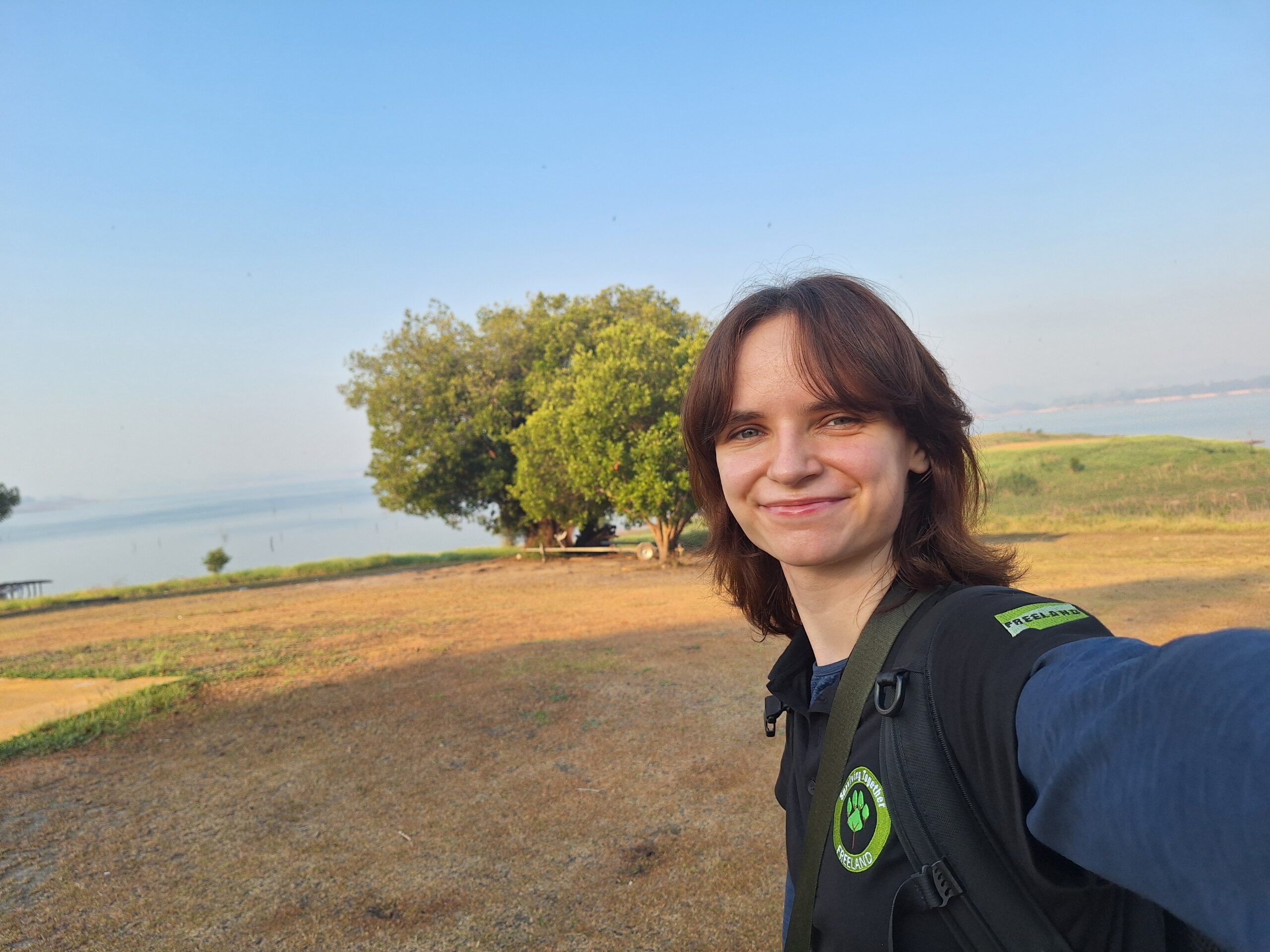
Freeland intern Katharina shares what it is like to support field conservation in Thailand, and how WildCats Conservation Alliance funding helps protect threatened wildlife, support rangers and strengthen monitoring in key tiger and leopard landscapes.
I am a recent environmental science master’s graduate currently interning with Freeland in Bangkok. Freeland is one of WildCats Conservation Alliance’s implementing partners and works to combat wildlife trafficking, strengthen protected area management and support the people protecting some of Thailand’s most important forests.
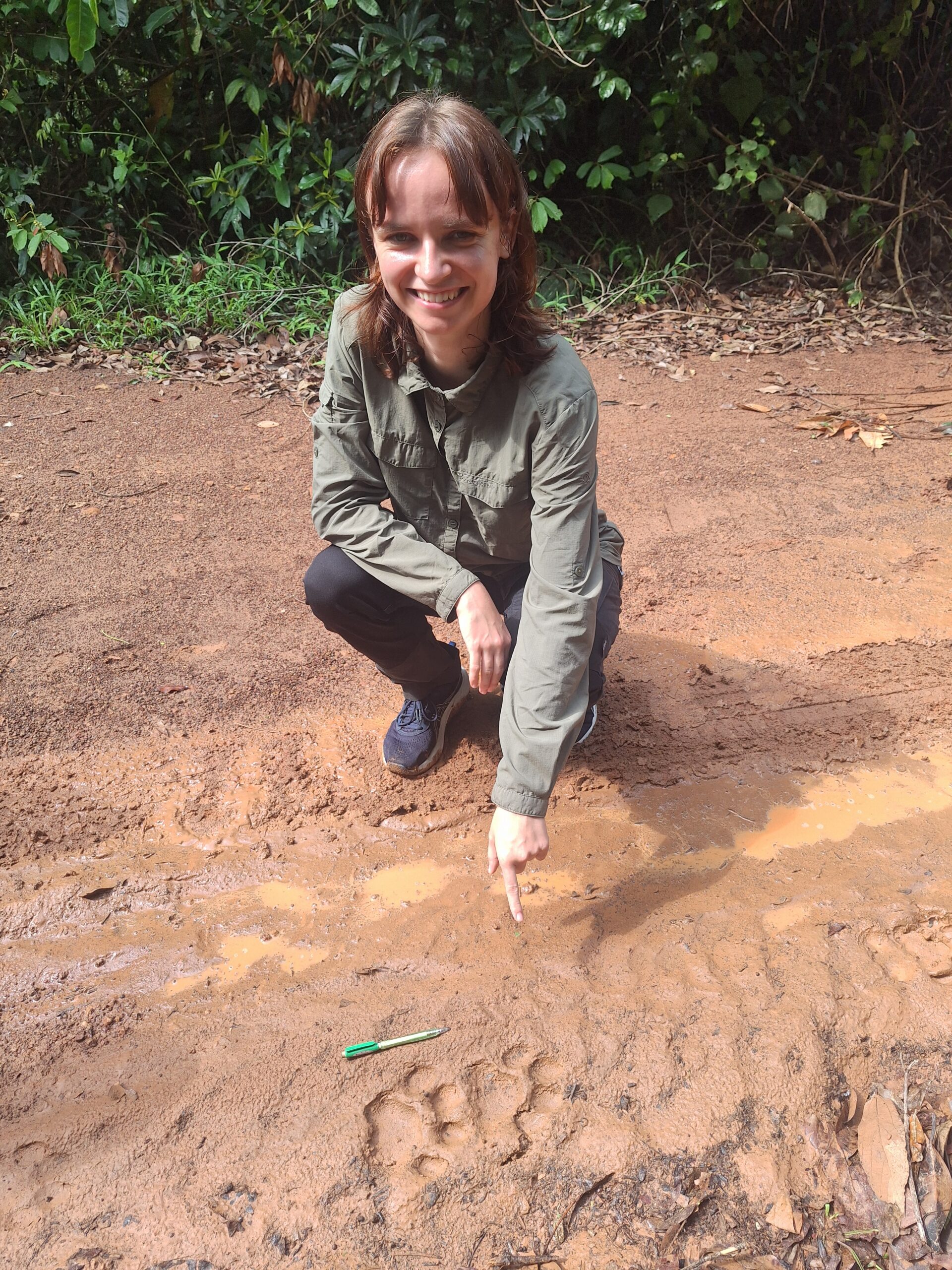
Katharina, Intern at Freeland in Bangkok,
Much of my role involves helping to turn field data into useful information. I support the preparation of project reports, helping to show how wildlife populations and conservation activities are developing over time. Each record tells part of a much bigger story: where tigers and leopards are moving, where threats are concentrated, and how rangers can be supported to protect these forests more effectively.
From Bangkok to the forest
Around once a month, I have had the chance to join field visits to different national parks and wildlife sanctuaries. These trips usually include meetings with park officials to discuss recent developments, wildlife records and conservation challenges. With the support of WildCats, Freeland also provides rangers with practical equipment, including water filters, hammocks, stoves, first aid kits and other field supplies. These items may sound simple, but they can make patrols safer and more effective for the people spending long days and nights protecting forests.
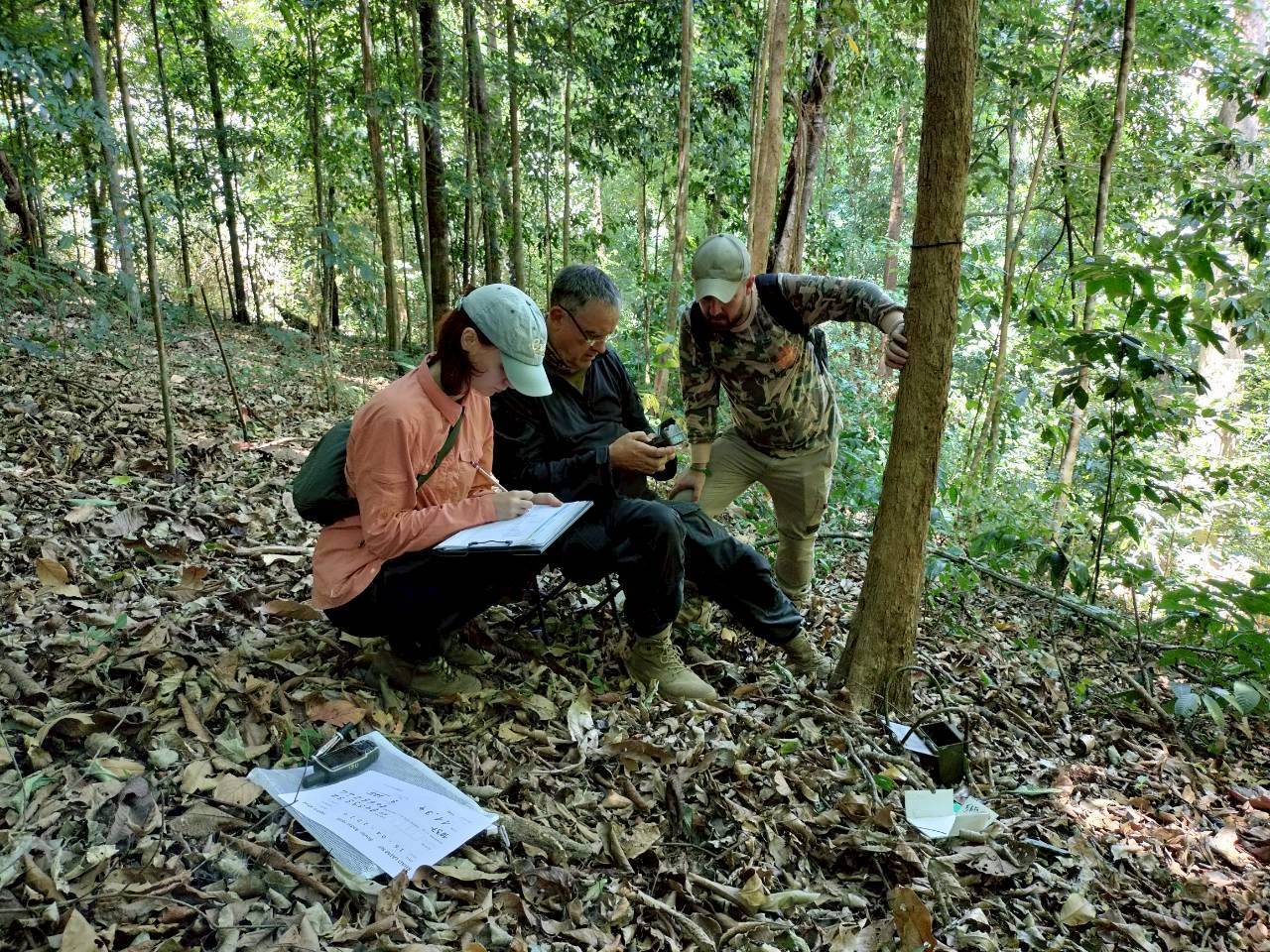
Katharina collecting data in the field
Khao Laem National Park
One of my most memorable field trips was to Khao Laem National Park in western Thailand, close to the border with Myanmar. The park surrounds a large reservoir and forms part of an important forest landscape for wildlife, including tigers, leopards and their prey.
Khao Laem is also a place where WildCats Conservation Alliance support has helped make long-term conservation work possible. Since 2019, WildCats has supported Freeland’s work in the park, helping strengthen ranger patrols, wildlife monitoring and protection efforts.
During the trip, several wildfires were active in the park. While officials were busy responding to the fires and managing the immediate risks, the wider conservation work still had to continue. It was a clear reminder that protected area teams are often responding to multiple challenges at once, from fire and habitat pressure to poaching and illegal activity.
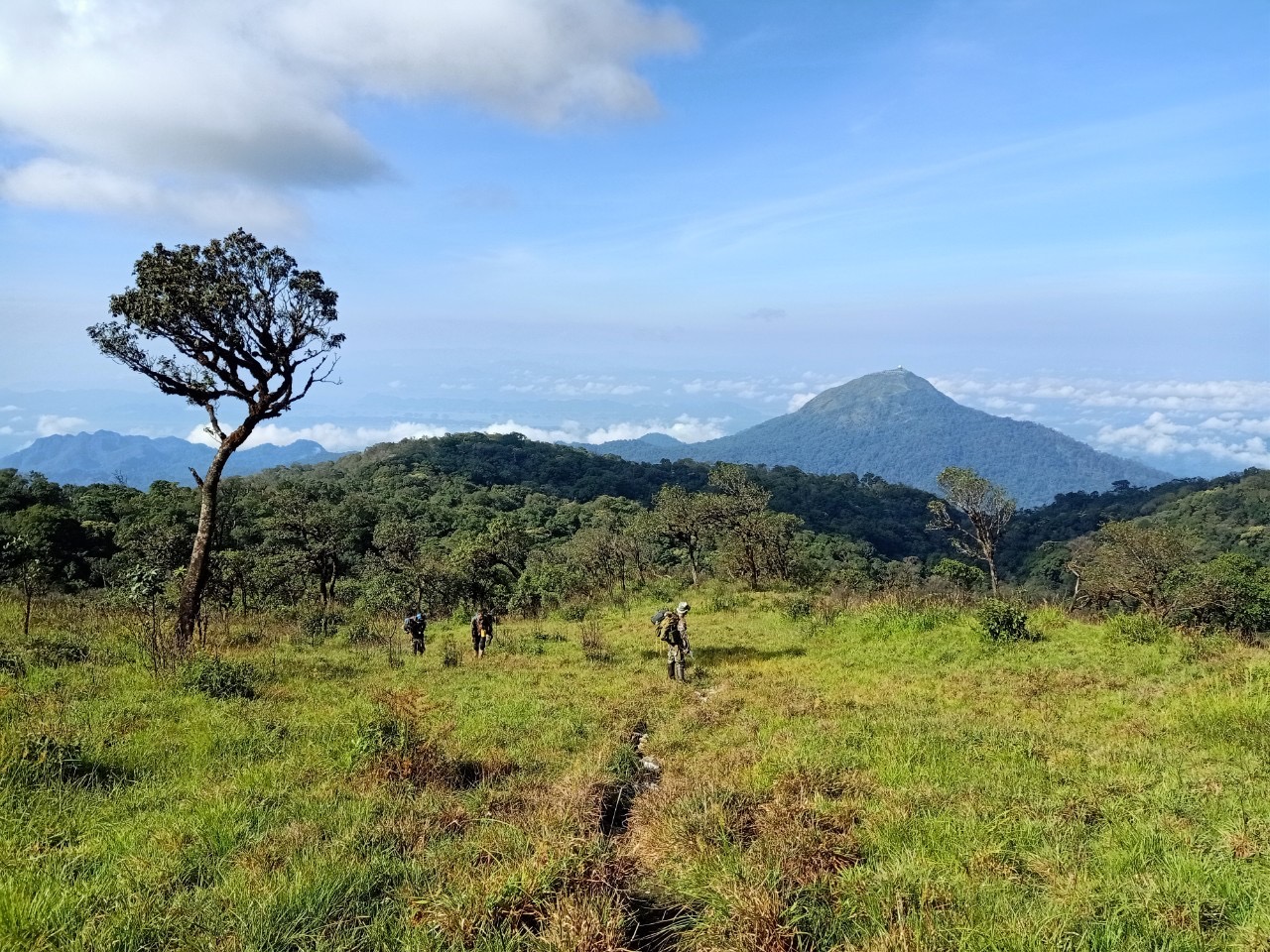
Khao Laem
Checking camera traps
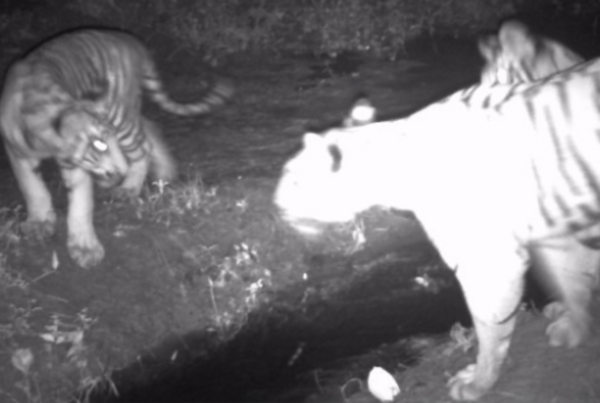
We also check camera traps that have been recording wildlife for months. Reaching them means trekking through the forest, collecting memory cards, checking batteries and assessing whether cameras should stay in place or be moved to new locations. Opening a camera trap after months in the forest is always exciting. You never know what might appear: deer, wild pigs, bears, leopards, or even a tiger. Through WildCats’ support for Freeland’s work in Khao Laem, these records can contribute to a clearer picture of how tigers and other wildlife are using the forest, and how teams can protect them more effectively.
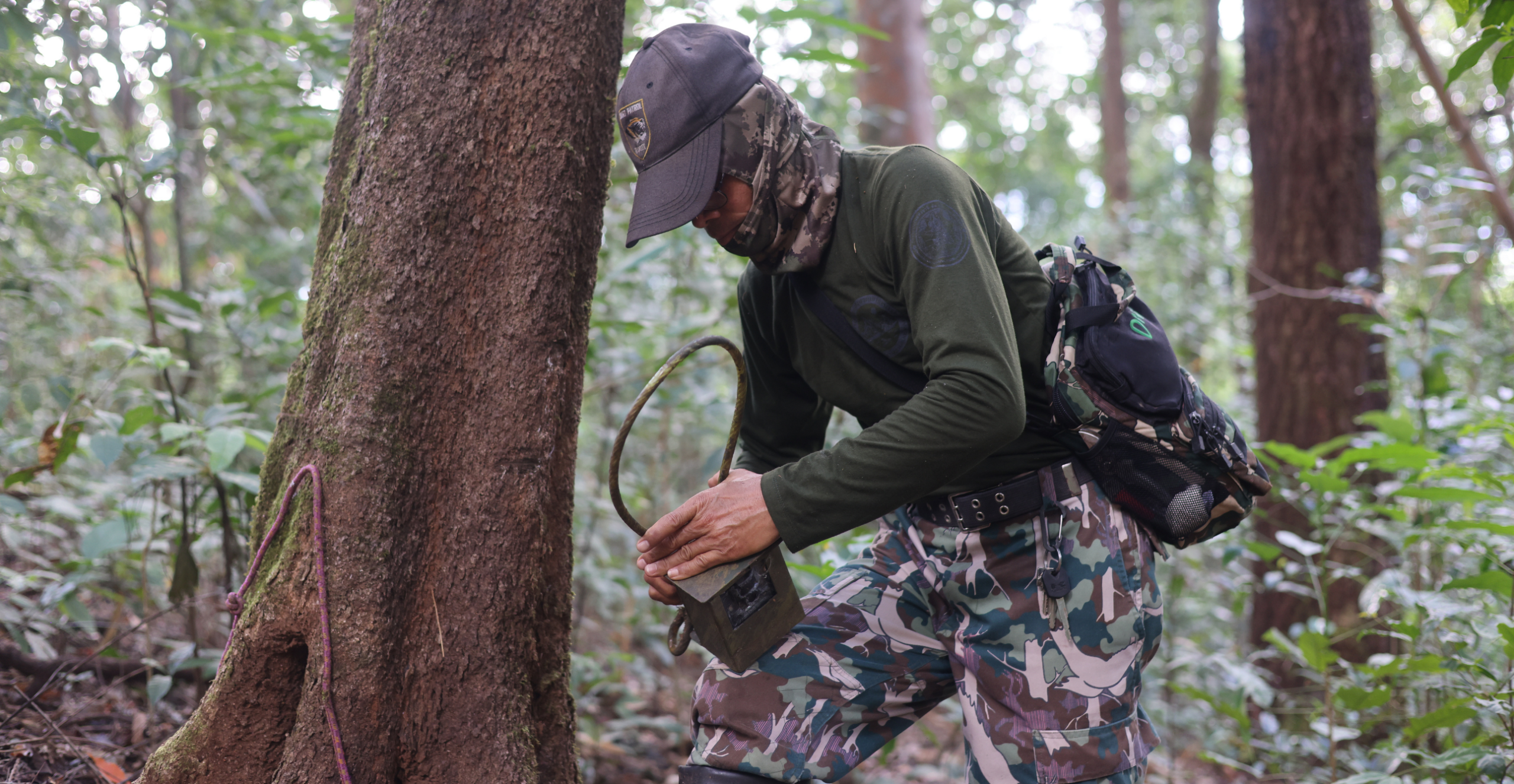
A ranger checking a camera trap
The threat of snares
One of the biggest threats to wildlife in Thailand’s protected areas is snares.
Snares are simple traps made from wire, rope or nylon. They are cheap, easy to make and can be set in large numbers. Although they are often intended to catch animals for wild meat, such as deer or wild boar, they are indiscriminate. Tigers, leopards, pangolins, bears, banteng and many other species can also be caught.
When a snare is found, its location and details are recorded, including the material used and the number of traps removed. This information helps teams understand where threats are concentrated and plan future patrols. But combating snares is challenging. Even after they are removed, new ones may be placed again only days later.
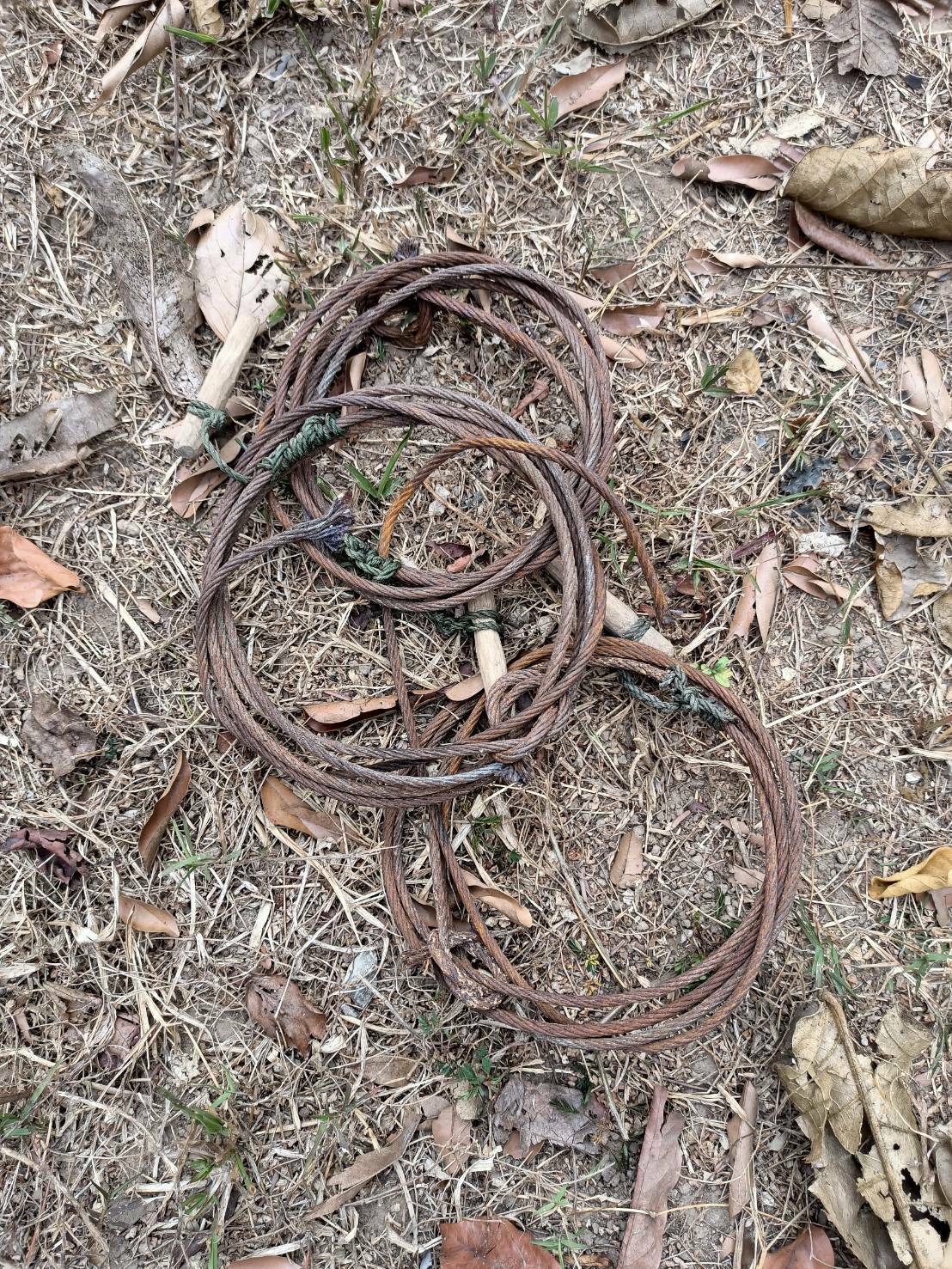
Wire snares removed from the forest
Working with communities
Protecting wildlife is not only about patrols and enforcement, it is also important to understand why poaching happens in the first place and how to prevent it.
Freeland works with communities living near protected areas through meetings, awareness activities and education programmes. These sessions help explain the impact of poaching on wildlife, ecosystems and local livelihoods. School activities also encourage children to value wildlife from a young age and become future stewards of the forests around them.
In some cases, poaching is linked to the need for income, so supporting alternative livelihoods is also important.
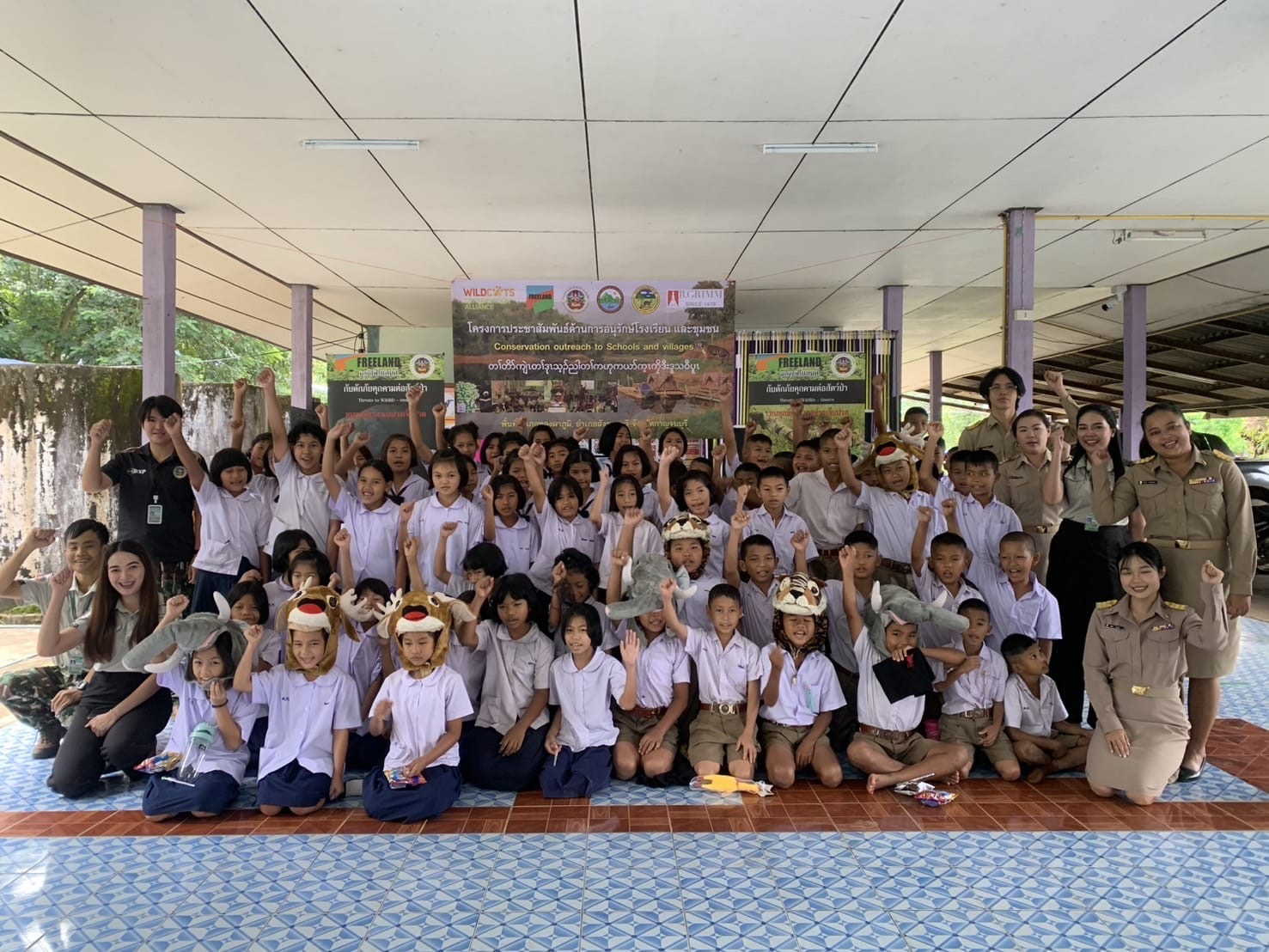
Recent school outreach activities
What WildCats support makes possible
My internship has shown me that conservation is built from many practical actions: checking a camera trap, recording a snare location, supporting a ranger patrol, meeting with protected area staff, or helping communities understand why wildlife matters.
Each action may seem small on its own, but together they create the evidence, protection and local support needed to give wild cats a safer future.
Most importantly, it has helped me understand the real impact of long-term conservation partnerships. Through Freeland’s work, supported by WildCats Conservation Alliance, vital forests for tigers, leopards and other wildlife are protected.