Site Information
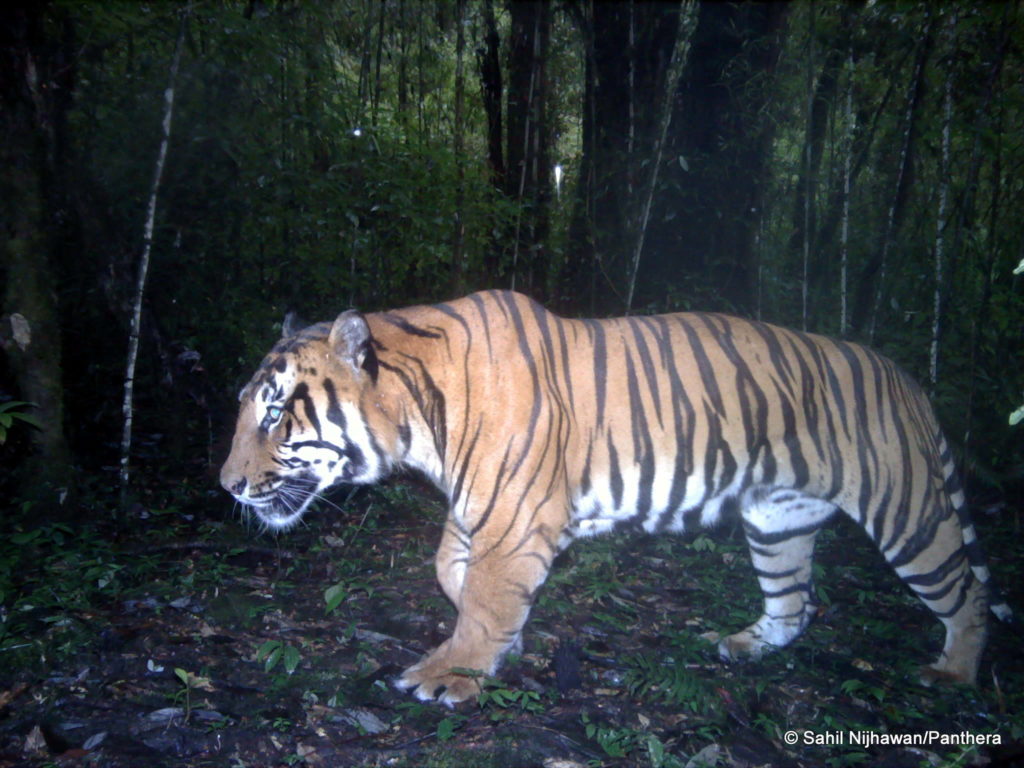
Sahil Nijhawan PhD, writes about the novel methods of counting animals devised to assist his study of tigers in the remote area of north eastern India. Arunachal Pradesh, India In the...
Read More
Abstract Habitat loss is the greatest threat to large carnivores around the world. Maintenance of functional connectivity in fragmented landscapes is important for long-term species persistence. Here, we merge landscape...
Read More
Abstract Sporadic sightings of the endangered Amur tiger Panthera tigris altaica along the China-Russia border during the late 1990s sparked efforts to expand this subspecies distribution and abundance by restoring...
Read More
Aaranyak interim 2017
https://conservewildcats.org/wp-content/uploads/sites/5/WildCats/ProjectReports/India/AaranyakIndo-Bhutan-Tiger_Mid-TermReport2017.pdfAbstract We studied the diet of the Bengal tigers (Panthera tigris tigris) in Chitwan National Park, Nepal, by identifying 109 prey items from 85 tiger scats. Tigers in this region...
Read More
Abstract The continuing development of improved capture–recapture (CR) modeling techniques used to study apex predators has also limited robust temporal and cross-site analyses due to different methods employed. We develop...
Read More
Examining the shifting patterns of poaching from a long-term law enforcement intervention in Sumatra
Abstract Current levels of illegal wildlife trade for many in-demand species are unsustainable and place them at a heightened risk of extinction. While several Asian protected areas standout for their...
Read More
ZSL Nepal final 2017
https://conservewildcats.org/wp-content/uploads/sites/5/WildCats/ProjectReports/Nepal/ZSLNepalFStrengtheningAnti-poachingMeasuresFinalReport2016-17editedforweb.pdfAbstract Meeting global and regional environmental targets is challenging, given the multiplicity of stakeholders and their diverse and often competing policy agendas and objectives. Relatively few studies have sought to...
Read More
Abstract Reliable information on wildlife populations and the threats they face is crucial for assessing the performance of conservation strategies. As part of its efforts to improve the effectiveness of...
Read More
FFI/Lingkar interim 2017
https://conservewildcats.org/wp-content/uploads/sites/5/WildCats/ProjectReports/Indonesia/FFIKerinciExtendingTigerProtectionInterimReportAucklandZoo20162017.pdfLingkar interim 2017
https://conservewildcats.org/wp-content/uploads/sites/5/WildCats/ProjectReports/Indonesia/Lingkar_interim_report2017.pdfFFI Kerinci interim 2017
https://conservewildcats.org/wp-content/uploads/sites/5/2017/09/FFIKerinciInterimReportAugust2017web.pdfPanthera final 2017
https://conservewildcats.org/wp-content/uploads/sites/5/WildCats/ProjectReports/Bangladesh/TSmithFieldbasedForensicreport2017_forweb.pdfZSL Nepal interim 2017
https://conservewildcats.org/wp-content/uploads/sites/5/WildCats/ProjectReports/Nepal/ZSLNepalStrenghteningAntipoachingMeasuresInterimReport2016-2017editedforweb.pdfAbstract Information on density and abundance of globally threatened species such as tigers Panthera tigris is essential for effective conservation as well as to evaluate the success of conservation programmes....
Read More
Freeland interim 2013
https://conservewildcats.org/wp-content/uploads/sites/5/WildCats/ProjectReports/Thailand/Protecting_Tigers_in_Pang_Sida_National_Park_2010_12/Freeland_PangSida_finalreport_2013.pdfFreeland final 2011
https://conservewildcats.org/wp-content/uploads/sites/5/WildCats/ProjectReports/Thailand/Protecting_Tigers_in_Pang_Sida_National_Park_2010_12/Freeland_Report_RBDC4_Jan12011.pdfFreeland interim 2010
https://conservewildcats.org/wp-content/uploads/sites/5/WildCats/ProjectReports/Thailand/Protecting_Tigers_in_Pang_Sida_National_Park_2010_12/FREELAND_EDIT_WEB_VERSION.pdfAbstract Reports claim a dramatic 22% increase in wild-tiger Panthera tigris abundance within 5 years (3,200–3,890 individuals; Associated Press 2016). Such significant population increases could potentially change the status of...
Read More