
Implementing Partner:

Wildlife Conservation Society (WCS)

Project Name:

Big cat connectivity across the Suifenhe Expressway

Location:

50 km along the Suifenhe Expressway, Heilongjiang Province, adjacent to the Northeast China Tiger and Leopard National Park, China.

Goal:

To reduce the barrier effect of the Suifenhe Expressway and adjacent transportation infrastructure to the movements of leopards, tigers, and their prey.

  • Objective 1: Collect baseline data on the Suifenhe-Manzhouli Expressway.
    • Summary of crossing structure quantity, type, and characteristics.
    • Summary of traffic patterns on Expressway.
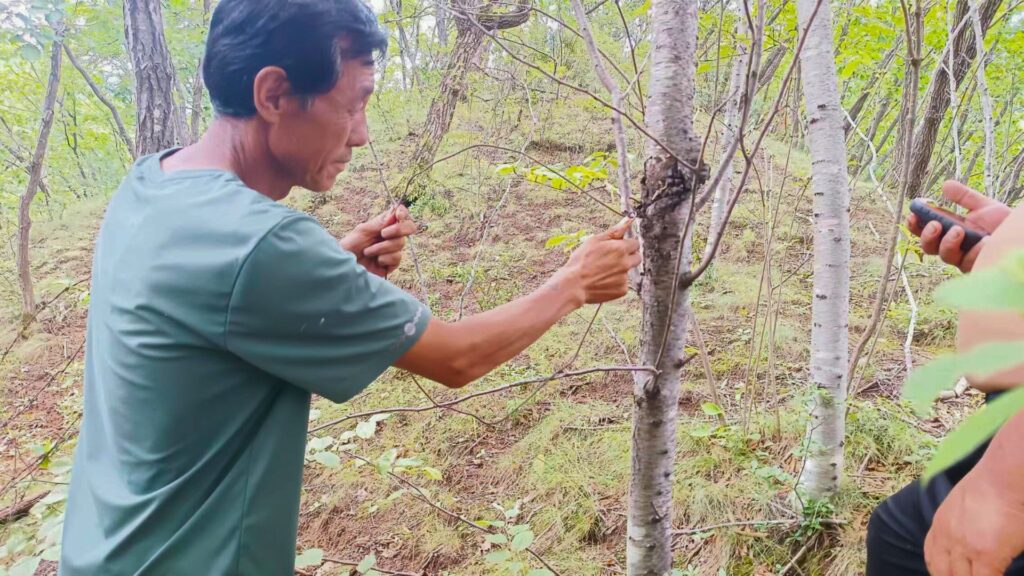
    • Summary of community attitudes towards tigers, leopards, and connectivity conservation.
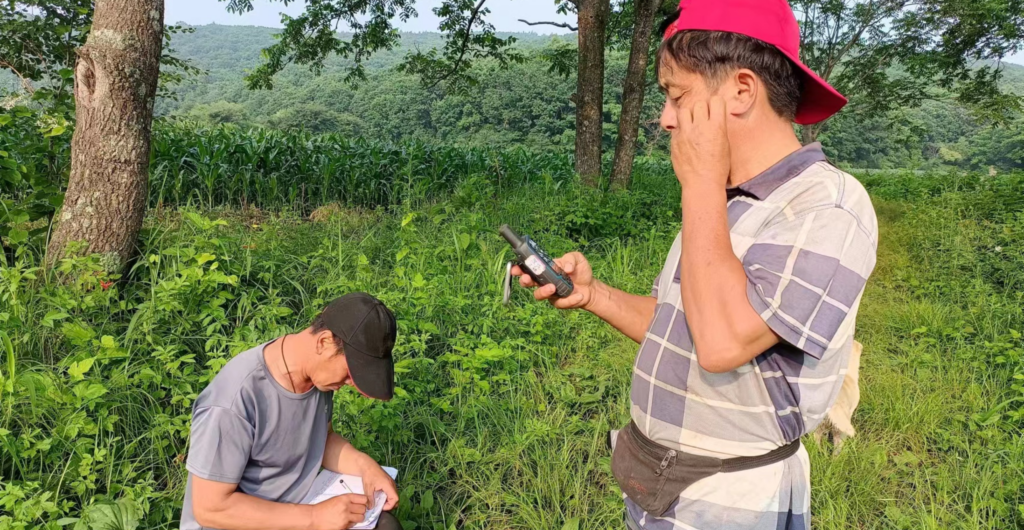
  • Objective 2: Collect data on tiger, leopard, and prey crossings of Expressway and railway.
    • Summary of wildlife crossing of Expressway, June 2026-Jan 2027.
  • Objective 3: Conduct landscape connectivity analysis.
    • Scientific manuscript-style report on landscape connectivity between Laoyeling and Border Range.
Background:

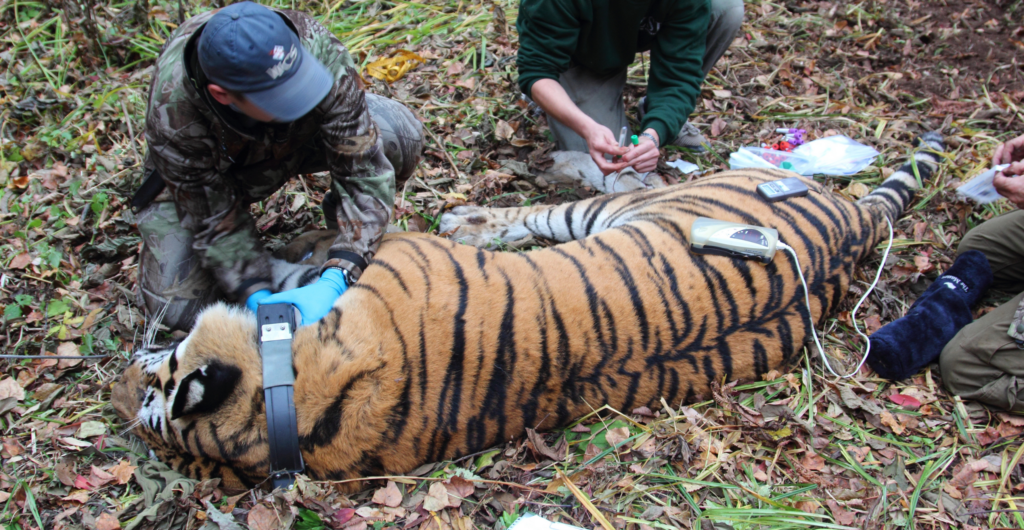
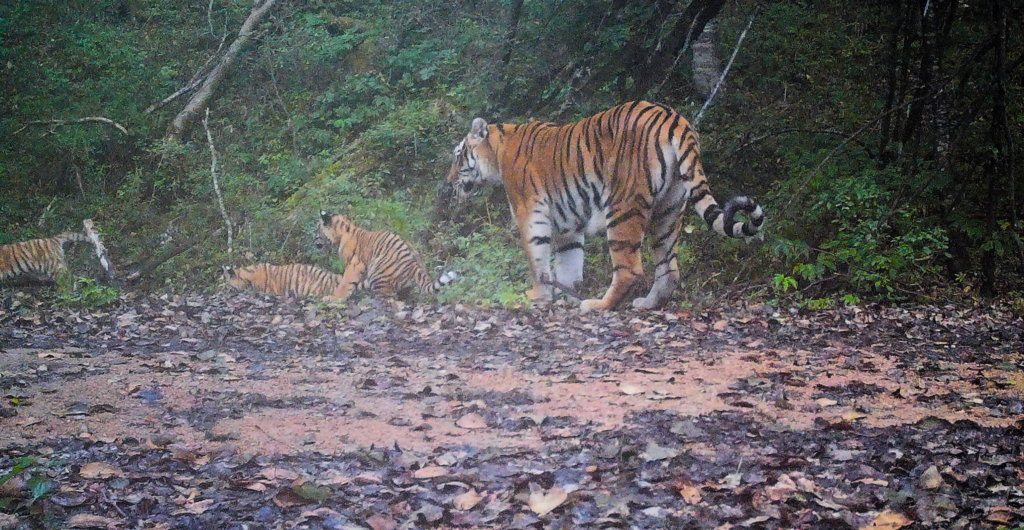
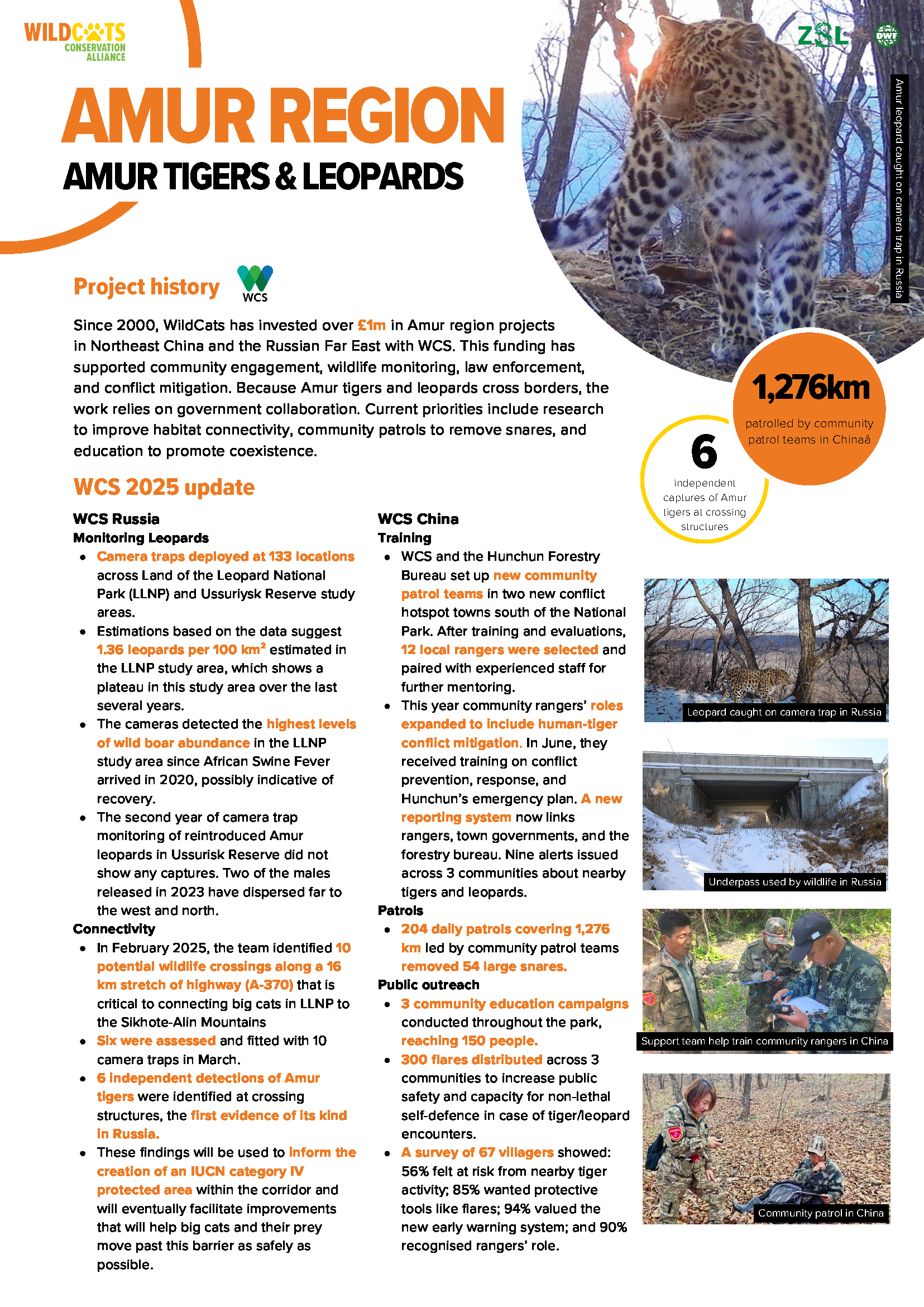
Since 1998, the Wildlife Conservation Society (WCS) has worked with partners to protect Amur tigers and leopards in northeast China. The Northeast China Tiger and Leopard National Park (NCTLNP), created in 2016, has driven significant growth in tiger populations. However, tigers and leopards are now expanding beyond the park into areas with limited conservation support.

Thanks to decades of investment by the conservation community, Amur leopards and tigers are recolonising forests of Northeast Asia. As these big cats spread into long-empty territories, their ability to move between suitable habitat has become vital to their genetic health and long-term viability in the landscape. In Northeast China, high human population density and linear infrastructure has limited the ability of Amur leopards and tigers to reclaim these territories. Several studies have highlighted places of high connectivity value, but few conservation efforts have been implemented to understand and reduce these specific threats. One key landscape is the Border Range, a 5,000 km2 transboundary landscape primarily in Russia but with access mainly from China.

In this first year, diverse research approaches will be used to understand the impacts of the high-traffic, fenced, four-lane Suifenhe-Manzhouli Expressway and adjacent transport infrastructure on leopard and tiger movements to and from the Border Range. This critical, baseline data and understanding will set the stage for future interventions and local engagement to facilitate big cat connectivity in subsequent years.

Key partners in the project include:

Chinese Academy of Transportation Sciences (CATS).
Northeast Tiger and Leopard National Park Research Institute, Yanbian University.

View our historical projects in China by visiting the archive.

Latest project updates

Share